We Can All Win: Why We Celebrate Each Other

Recently, I experienced an outpouring of congratulations on LinkedIn—messages full of kindness, joy, and genuine celebration for a professional milestone. I was moved, of course, and am still, but more than that, I found myself wondering:

Why do we love celebrating each other?

What makes us say “Happy birthday!” like we really mean it? Why do we feel pride when a colleague gets promoted, when a friend receives an award, when someone in our community gets their long-overdue flowers?

It feels natural. Automatic, even. But if you step back and think about it, it’s actually quite radical.

We live in a society built on competition and comparison. From early schooling to career advancement, we’re told to race to the top, to beat the curve, to outshine others in order to succeed. And if you spend anytime on the male side of the internet, it’s all focused on being the Top Dog Alpha Sigma Terminator.

But here’s the thing: celebrating someone else is the opposite of that. It’s not competitive. It’s not even cooperative. It’s more than that.

It’s selfless.

It’s other-more.

And, that is fascinating.

Are we more kind than competitive? Can that be true? Is that us?

In graduate school, I heard a phrase that shifted something in me:

“We can all win.”

It was a reminder that our learning journeys weren’t zero-sum games. That the person sitting next to me in class wasn’t my competition, but a resource. That we weren’t there to defeat each other, we were all there to grow … together. And doing it together made us stronger individually.

Like the redwoods, we are each other’s foundation for growth. We’re not competing for ground space, we are sharing roots. My foundation is yours, and yours is mine.

That phrase has followed me into every corner of my professional life. It’s a mindset. A worldview. And yet, when I see people go out of their way to cheer each other on, to amplify someone else’s moment, it still surprises me in the best way.

It surprises me because it cuts so swiftly against the narrative we’re sold. We’re told we’re divided. More divided than ever. We are Polarized. Split into factions.

You’re either woke or anti-woke. You’re either a patriot or you hate America. You’re either Red or you’re Blue. City or country. North or south. Rock or rap. Beer or wine. Waffle House or First Watch (sorry, I’m hungry for breakfast).

But when I see how eagerly we show up to celebrate each other, I think:

Maybe we’re not as broken as we think.

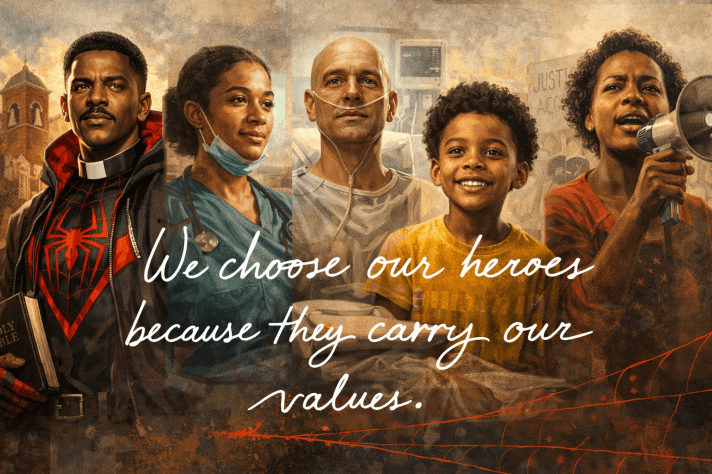
Kintsugi me and I’ll kintsugi you

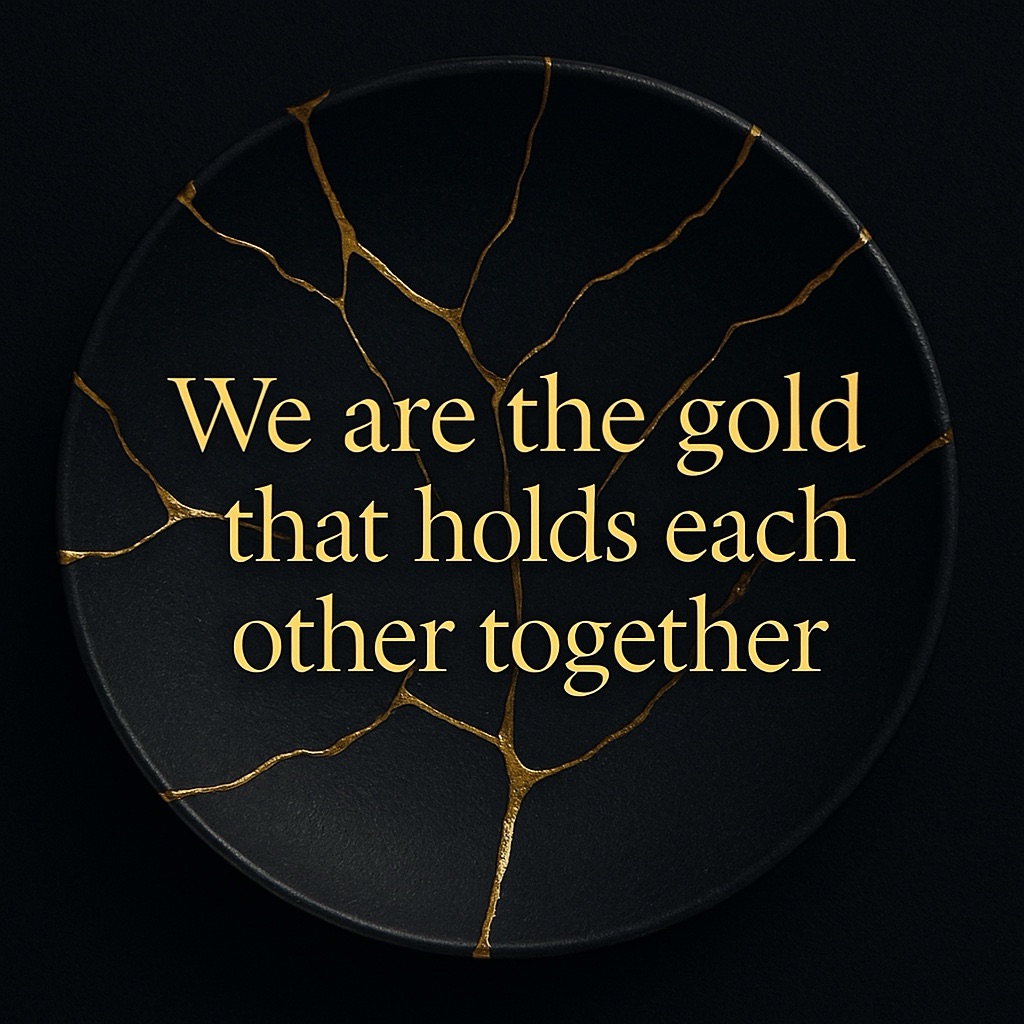
Years ago, I was introduced to kintsugi, the Japanese art of repairing broken pottery using gold. The idea is that a bowl isn’t less valuable because it’s cracked. When it’s repaired, it’s more beautiful, more meaningful, more whole because of its brokenness.

At first, I saw this as a metaphor for healing: life breaks us, and we fill those cracks with gold over time. We get stronger when we heal.

But now? I’m starting to believe something deeper. And, I have to give Netflix’s K Pop Demon Hunters a lot of credit for this one. There’s a moment in the story that made me rethink the whole idea: what if life doesn’t break us? What if we start out already a little cracked?

We are born broken, and we are born golden.

But the gold we have, the gold we are born with, is not for us. My gold isn’t for me. Yours isn’t for you.

We are the gold that holds each other together.

Just like the lyrics in the song Golden by Huntr/x say:

No more hiding, I’ll be shining
Like I’m born to be
‘Cause we are hunters, voices strong
And I know I believe

We’re goin’ up, up, up
It’s our moment
You know together we’re glowing
Gonna be, gonna be golden

Maybe that’s why we celebrate each other.

Because we recognize that your win is part of my wholeness, and mine is part of yours.

It’s not just kindness. It’s kinship.

So, thank you for sharing your gold with me. If you’ve ever celebrated me, or anyone else, I hope you know what that means. You’re doing something human. Something generous. Something golden.

Maybe the most radical thing we can do in a fractured world is to keep showing up for each other. In joy, in sorrow, in triumph, and in loss.

Maybe we really can all win. And, I sincerely hope you do.

Stay golden!

Strategic Pauses: Unlocking Creativity and Clarity

Remember that time I shared that line, “Good, Better Best, Never let it rest, until your Good becomes your Better and your Better becomes your Best.”, yeah, I was wrong. Rest is really really good and it turns out it can be helpful in getting from good to best too.

I have returned from a purposeful pause from blogging that felt intentional, restorative, and absolutely necessary. In this time, I’ve realized something vital for leadership and patient care:

There is power in the pause.


Pause for Empathy and Preparation

In healthcare, empathy isn’t just a feeling, it’s an active skill, shaped as much by intention as by emotion. Before entering a patient room, what if we practiced an empathy pause?

An empathy pause is taking a moment to ask:

  • How might I feel receiving these words?
  • What resources or support would matter most right now?

This moment is about more than self-awareness, it’s a bridge toward understanding another’s lived experience. It is useful in patient encounters and in management as well.

Brené Brown’s research on vulnerability highlights that the foundation of empathy is born when we allow ourselves to pause, feel, and lean into uncertainty. As she puts it, vulnerability is necessary for real connection and “our most accurate measure of courage” (podcastworld.io). These empathy pauses are acts of courage, they bring clarity and deepen communication by slowing us down enough to truly hear and value another’s lived experience.


Pause Sustains Creativity and Reflection

Pausing is not a passive activity, it’s strategic. Adam Grant has noted that allowing the mind to remain with unfinished tasks keeps them active in your subconscious. Drawing on the Zeigarnik effect, he explains that this state of mental simmer can boost creativity and insight (npr.org). I especially love the line he shares from Aaron Sorkin, “You call it procrastinating. I call it thinking.”. We need time to process things organize them and that takes time and often means we have to walk away from a task, while incomplete, to figure out our next best steps.

An example of how we can set ourselves up for success with this comes from something I learned when I was in my doctoral program. I was advised to always end a writing session in the middle of “a downhill”, like writing the first sentence of the next paragraph. It became its own act of motivation as it encourages me to get my ideas organized for the next writing session. So when I sit down next time, I basically written through the next paragraph or two before I ever have to think about what to say next.

We can do this in all kinds of tasks. It’s not my wife’s favorite, but with two young children I don’t ever seem to have the time to do all of the dishes in one go. So I do them categorically. I wash the plates, then the bowls, then mugs, etc. It might be a neurosis, but it helps when I get interrupted…

Let me be honest, I want to be interrupted!

If I am interrupted between categories, I will wash one of the next category. When I see one bowl sitting in the dryer rack it is a glaring reminder to go finish the dishes. Have you ever seen a single fork on a drying rack next to a pile of dirty dishes? Try it, it will drive you to action, I promise.


The Pause in Dialogue and Music

I once heard this line about a musician and I have also heard it said about great actors and actresses. It is not how they play the notes, it is how they play the pauses. I recently watched the classic, “You make me want to be a better man.” scene from the movie As Good As it Gets. Jack Nicholas and Helen Hunt have this beautiful back and forth where the writing is absolutely superb, but that is not what makes the scene. It is how they each are acting when the other actor is speaking. They are both phenomenal in that scene at playing the pauses.

By playing the pauses we give space that allows meaning to emerge. As with great actors and musicians, who use silence like a second instrument, intentional silence in our conversations and our care can give voice to emotion and meaning. This is where humanity and connection live. How many times have you been half listening to someone until they pause mid-sentence? We are built to identify patterns they are soothing to us, so when a pattern breaks, we are programmed to investigate. So the pauses are immediately interesting to our perceptions and what happens in them can be a great opportunity for connection.

In practice, there are a few things we can do when taking an intentional pauses like taking time for deliberate reflection, like “What assumptions am I making?” or “What values might inform this decision?”.

Playing the pauses transforms downtime into development time (news.harvard.edu). The Harvard Business School found that leaders who incorporate short strategic pauses perform 34% better in decision-making and foster environments where teams are more likely to voice concerns early (higherperformancegroup.com). Purpose becomes clear, reactions become measured, and creativity emerges from the cracks between moments.


The Dark Side of Pausing

Pause is a powerful tool, until it isn’t.

There are a great many instances of this as of late, but pausing too loudly or for too long has risks as well. First of all, I’ll just say what some of you might’ve already been thinking, pausing can never be stopping. That’s not strategic pausing, that is strategic cowardice. If you want to stop doing something, you can just stop doing it, but announcing that you will be taking a moment to assess a situation that you then eventually decide against is just risk mitigation and everyone sees it plainly. The most pressing example of this is what has occurred across industries with respect to diversity, equity, inclusion, and belonging, and the response to the anti-woke movement.

Pausing to understand emerging social movements and counter movements and how your organizations will respond is wise. But when the pause is not followed by any substantive action, the silence speaks loudly. In moments of political tension or moral urgency, institutional pauses can inadvertently communicate silence as disapproval. In today’s anti-woke environment, when organizations silence their advocacy for marginalized communities, the pause becomes a void. The pause becomes a loudspeaker for many in these communities that all of the actions the organization once engaged in to support DEI were never authentic or legitimate. The absence of support feels like withdrawal. In instances like these pausing isn’t neutral, silence a statement.

As I reflect, pause wisely, but don’t slow to silence.


Pause as Shared Vulnerability

True leadership invites shared vulnerability. Brené Brown’s work, particularly in Dare to Lead, emphasizes that courage isn’t acting tough, it’s being honest about uncertainty (npr.org). A culture of pause wherein leaders surface their own unanswered questions builds psychological safety. In times of uncertainty, people are looking for leaders to say, “Look I don’t know what we are going to do in this new environment, but I know our shared values will lead us to next best steps. While we work to build a plan, if you have suggestions or concerns, please reach out to the leadership team to help us make the best next move.”. In this way, an intentional pause in times of uncertainty can become a team-builder, a psychological safety incubator, bringing trust, innovation, and creativity to a confusing situation.

Perhaps rather than Good, Better, Best being wrong perhaps it just needs another stanza.

Good, better, best,

never let it rest,

until your good becomes your better,

and your better becomes your best.

But if along the way,

you find yourself distressed,

take a pause, then carry on,

and soon you’ll be your best.


In Closing

Pauses can be power: to ground us, to prepare us, to open us. They allow us to lead and care with empathy, courage, and intentionality. But in a world that also demands action and affirmation, we must ensure our pauses are deliberate action that do not lead to absence.

Practical “Pause Prompts” for Leaders & Clinicians

Here are pauses that make difference:

  • Before critical communication: “Let me pause for a moment. What am I assuming, and how will this land?”
  • At decision junctions: “I’d like 5 minutes to reflect, my brain will keep working on this in the background.”
  • During conversations: “I want to check in, how does this land with you?”
  • After advocacy efforts: “What’s our next step? Silence here will speak louder than words.”

References & Further Reading

  • Basically anything by Brené Brown on vulnerability and leadership
  • Adam Grant on creativity, reflection & the Zeigarnik effect (npr.org)
  • Harvard Business School: strategic pauses improve decision-making by 34% (higherperformancegroup.com)
  • Community case: leader’s pause in crisis yields stronger team outcomes (higherperformancegroup.com)

Striving for Excellence in Healthcare: The Good, Better, Best Approach

Good…

Lately, things have been going right.
Awards. Wins. New role. Family milestones. All the stuff that signals progress.

And I am grateful, deeply.
But I’m not satisfied.

There’s this motto I grew up with, something my Caribbean parents (and just about every schoolteacher I knew) used to say:
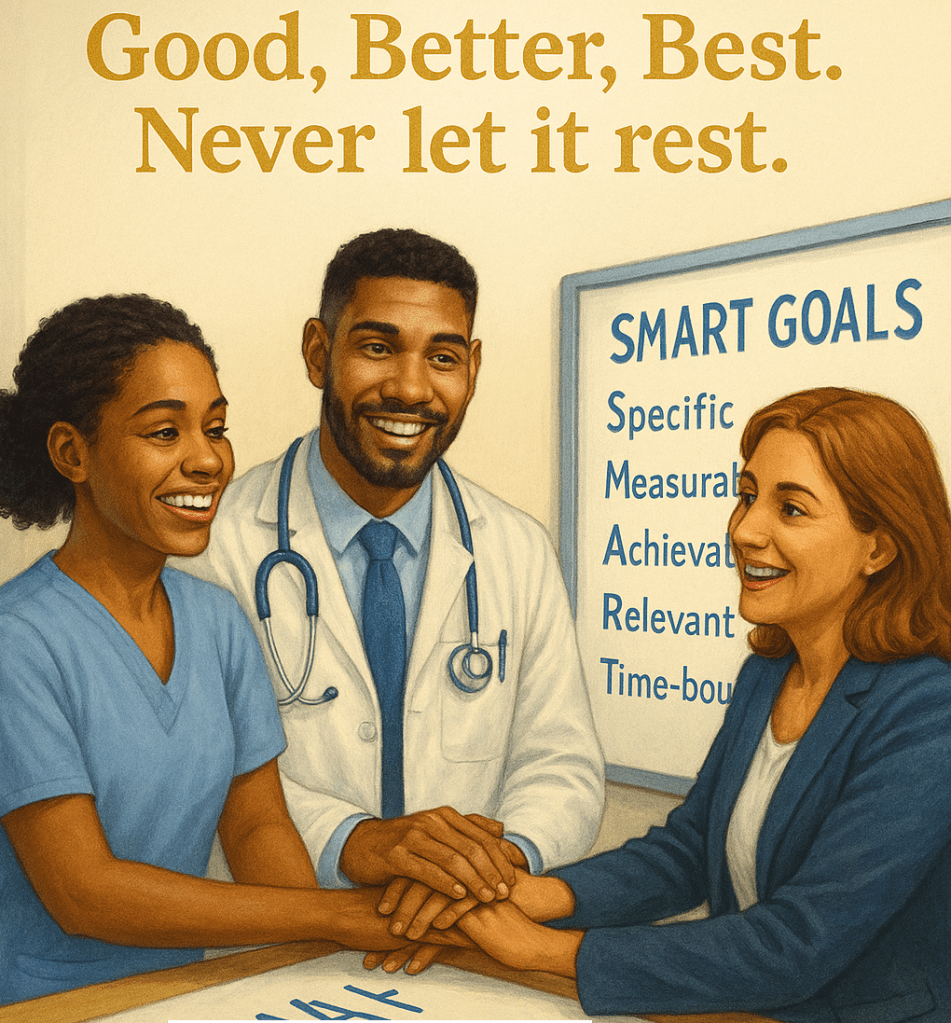
“Good, better, best. Never let it rest until your good becomes your better and your better becomes your best.”

It was drilled into us as kids, but the older I get, the more I understand it’s not about perfection. It’s about pressure, positive pressure. The kind of positive momentum that keeps you moving even when the world says you’ve probably done well enough.

Better…

Lately, I’ve been thinking about what it means to reach for “best”. Not as a final destination, but as a standard of intention. In healthcare, especially, that’s a radical concept. “Best” is a moving target. “Best” is context-dependent. “Best” is often unattainable.

But when we say “best”, we don’t necessarily mean ideal. In every scenario, the ideal is that our patients would not need us, that they would live healthful lives, in environments that prioritize their wellness, that the powers that be would center every decision on patient’s individual wellbeing. Ideal is not attainable, but our best is.

When we tell ourselves that we will deliver the care that we’d give our mothers.

That’s the real metric. That is a standard we can hold ourselves to.

With Mother’s Day on the horizon, I find myself asking:
If your mother were the patient, would you be okay with “pretty good”? With “most days, we get it right”?
How could you justify anything less than your best for her?

You wouldn’t. You couldn’t.
And that’s the whole point.

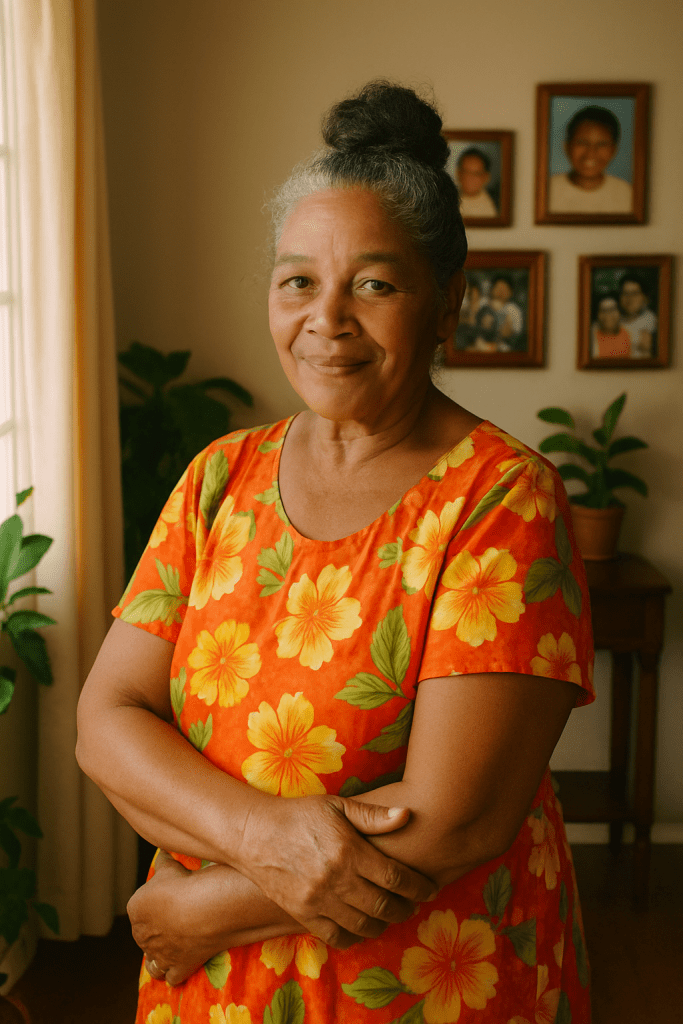
(The image is not my mother, she would want you to know that. She’s much more beautiful than even AI could imagine.)

The Science of Striving: Goal Setting in Healthcare

Research underscores the importance of goal setting in driving performance and improvement. In healthcare, setting specific, challenging goals has been shown to effectively motivate attainment, especially when formulated within a SMART framework (Specific, Measurable, Achievable, Relevant, Time-bound) . Moreover, engaging patients in goal-setting processes enhances their confidence, motivation, and satisfaction with care, highlighting the collaborative nature of striving for “best” in clinical settings .


Tim Duncan: A Case Study in Consistent Excellence

Tim Duncan, the NBA Hall of Famer known as “The Big Fundamental,” exemplifies the “good, better, best” philosophy. Raised in the U.S. Virgin Islands, Duncan was taught this mantra by his late mother, which he carried throughout his basketball career . His unwavering commitment to excellence, humility, and teamwork led to five NBA championships and a legacy of consistent performance. Duncan’s approach wasn’t about flashy plays but about doing the right thing, the right way, every time. A lesson that resonates deeply in the pursuit of excellence in healthcare.

Best…

Patient Experience Week just passed. Nurses Week is here. These are moments when we pause to celebrate the incredible things healthcare professionals make possible when they operate at full capacity, when they lead with heart, skill, and grit. We’ve seen what’s possible when people show up and give it everything they’ve got.

But the celebrations also shine a light on what we’re still not doing. On the systems that are still too slow. On the experiences that are still inconsistent. On the gaps we’ve normalized.

And if we’re serious about change, we have to admit that we haven’t seen us at our best yet.

You think you know what you’re capable of, but our best is still out ahead of us, waiting to be reached.
Potential is a dare.
Best is a challenge.

The wins are worth celebrating. It is important to celebrate each other in the pursuit of excellence. But we are not celebrating an end, we have not accomplished all that we will accomplish. We are celebrating our ongoing commitment to the noble pursuit of excellence in health care.


Because we’re serious about equity, about empathy, about excellence, we can’t stop at “good” enough.
We can’t even stop at “better.”
We have to keep going. For our patients. For our teams.
And yes, for our mothers.

In both healthcare and life, the pursuit of “best” is a continuous journey. It’s about setting goals that challenge us, collaborating with others to achieve them, and never settling for “good enough.” As we honor the dedication of healthcare professionals during Nurses Week and reflect on the care we provide, let’s remember to strive for the excellence we’d expect for our own mothers. Because in the end, every patient deserves nothing less than our best.

Yard work and Health Administration: Designing for Delight, Not Just Duty

Let’s be honest: yard work is not fun.

It’s tedious. It’s repetitive. You sweat. You pull weeds only to see more next week. You mow, trim, rake, and then do it all over again. The labor isn’t the reward. We do it because we’re after something else: a yard we can enjoy. A space to host friends, watch the kids play, sip coffee in the morning. A space that feels good.

We don’t want to experience our yards as a chore.
We want to experience them as joy.

Now think about the best outdoor places you’ve been—a neighborhood park, a botanical garden, a golf course, maybe a favorite trail. These spaces didn’t just happen. They were shaped with intention. Someone thought about what you would see, where you might pause, and how you would feel while moving through them. Often, they were thinking about your experience long before you even arrived.

When I was an undergrad, I stumbled into a study abroad program led by the landscape architecture department. I’ll admit it—I chose it because it was two weeks long instead of one. But what I got was a deep, surprising education in the emotional power of space. We used the city of Paris as our classroom and traced the legacy of André Le Nôtre, the visionary behind the gardens of Versailles.

Our instructor talked about more than just beauty—they talked about emotional design. About how great spaces don’t just impress you, they invite you in. You don’t feel directed, you feel drawn. You don’t notice the symmetry or the structure. You just feel calm, or awe, or joy.

Great design disappears.
And in its absence, experience is born.

This idea stretches far beyond gardens.

Take healthcare, for example.

Too often, healthcare administration feels like yard work with its endless checklists, processes, fixes. We dig into spreadsheets. We prune workflows. We patch inefficiencies and pull bureaucratic weeds. Important, yes. But inspiring? Rarely.

But what if we approached healthcare like Le Nôtre approached Versailles?
What if we designed for delight, not just duty?

Think of a hospital or health system as a vast garden.

The CEO becomes the master landscape architect crafting a master vision. Senior administrators are the gardeners, executing on the vision by nurturing the system, correcting what’s overgrown. This analogy goes deep … Your data teams? The irrigation system, quiet, essential, working beneath the surface to ensure a thriving ecosystem of interactions from supply chain to human resources to care delivery. Frontline staff?well they are the flowers, of course, they are the big show and who and what patients will most remember and return to. And the patients? They are the guests in our garden, the ones we design for.

When I was in Paris, we learned about a public rose garden where city sanitation workers hand-pruned each bush, and they did this daily! Not just to clear trash, but to pluck fading blooms before anyone could see them. The designer had envisioned only perfect roses in their original design, and the visitors expect only roses in bloom, and so, to honor their promise to uphold the design and to honor the guests, these workers worked diligently at their tasks and held that promise. That labor wasn’t about aesthetics, it was not about looking like you care, it was about delivering on a promise to provide the best experience. The joy of the visitor relied on the discipline of the sanitation worker.

Likewise, when you smooth out a clunky intake form, fix an IT glitch, or redesign a scheduling process, it might feel like yard work. But it can be the thing that helps a frightened patient feel calmer, or gives a clinician five minutes back in their day, or helps a family find clarity when they need it most.

You’re not just fixing things.
You’re creating Versailles.

Yes, it’s repetitive. Yes, it’s work. But it’s not meaningless. Because when healthcare systems work well, when they feel seamless, inviting, humane—it’s because someone behind the scenes was tending the garden.

So don’t focus on the weeds. Focus on the experience you’re cultivating for patients, for providers, for families.

The best gardens and the best healthcare systems share something in common:
They require constant, quiet care.

And when they’re working just right, you don’t notice the effort.

You just feel better.

Enhancing Patient Care: Lessons from Basketball’s Unsung Heroes

March Madness is over and I couldn’t be more ecstatic over the University of Florida Gators being crowned the National Championship for the third time in their history. I was at UF for the Back-2-Back Championships in 2006 & 2007. I must have had basketball on the brain while attending this year’s Elevate PX conference by The Beryl Institute as I found myself reflecting on the importance of role players on winning teams.

Recently, I heard an analogy that related basketball performance to regression models in analytics. I’ll spare you the nerdy details, but the methodology presented aimed to identify the key driving variables that significantly influence outcomes by focusing on a powerful few variables rather than every possible factor. If instead of using 20 variables that explain 90% of performance, if you could instead use 2 or 3 variables that are able to explain 85% of performance, that would have some benefit in analytic speed and processing. The presenter explained that this concept mirrors the construction of a championship basketball team: you don’t need all 12 players to be superstars. If you have just two or three exceptional players, you will win most games. The remaining 8-10 players do not really need to be that good, he claimed.

This perspective led me to consider the realm of patient experience in healthcare.

In healthcare, the spotlight often shines on the “stars”, for many, these are the doctors and nurses who are central to patient care. However, there are many unsung heroes, as well.

The Matthew Dellavedova Analogy

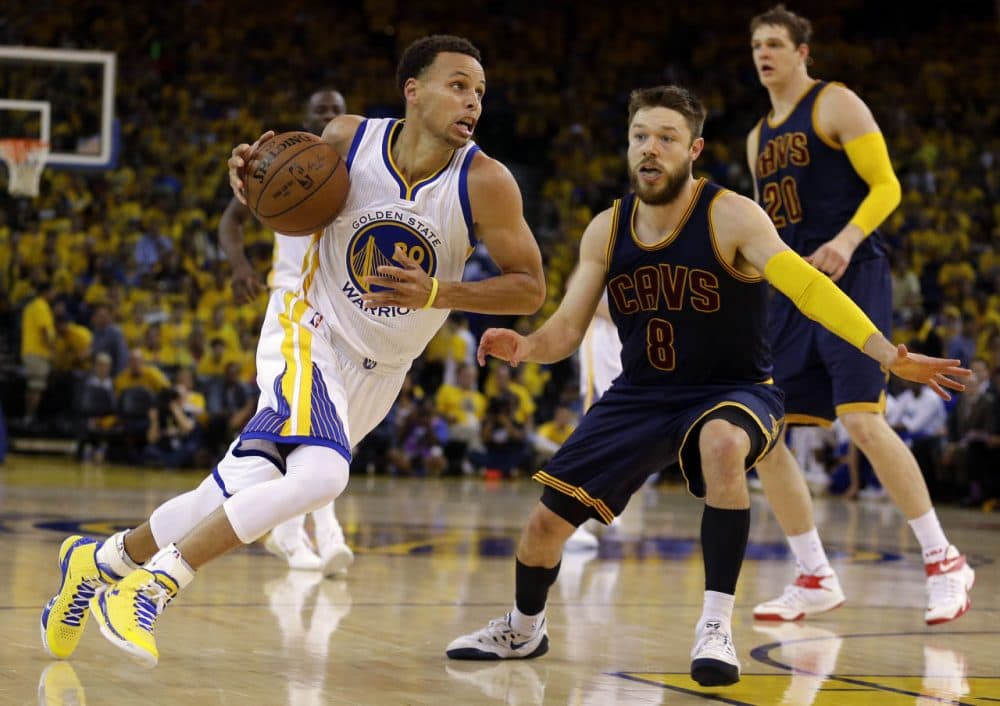
Consider Matthew Dellavedova during the 2015 NBA Finals. While not the marquee player like LeBron James or Kyrie Irving, Dellavedova’s contributions were instrumental. Tasked with guarding the league MVP, Stephen Curry, Dellavedova’s relentless defense and tenacity disrupted the Warriors’ once in a generation offense. His hustle and determination exemplified how a role player could elevate the team’s performance.

While most players are evaluated by stats like points and rebounds, there are a different set of statistics to appreciate the contributions of role players. Two in particular are referred to as “hustle statistics”, measures that show how much a player is impacting the players around them. Important efforts that don’t have a direct influence on the scoreboard, like setting picks and running down loose balls, the plays that coaches love and only the grittiest players enjoy.

Interestingly, both of these statistics are more widely used in hockey than basketball, but some teams, like the 2015 Cavs, have started to incorporate them as part of their “Moneyball” type analytics on team performance. The double assist is when a player makes a pass that leads to an assist (a pass leading to a score). To contribute a double assist, a player has to be unselfish and believe in team victory over personal achievements. Another important hustle statistic is the plus/minus which measures the point differential when a player is on the court versus when they’re not. A positive plus/minus indicates the team performs better with that player in the game, highlighting the impact of players who may not fill the stat sheet but contribute significantly to team success.

Each of these metrics and concepts parallels the efforts of patient experience professionals who implement systems and processes that enable frontline healthcare workers to deliver superior care. Their behind-the-scenes work creates an environment where clinicians can excel, directly impacting patient perceptions and outcomes.

Identifying Healthcare’s Culture Players

Translating this to healthcare, patient experience professionals are akin to these invaluable role players. The patient advocates, volunteer administrators, and patient experience professionals each play pivotal roles in ensuring the system functions optimally. They may not perform surgeries or prescribe medications, but they ensure the healthcare environment is patient-centered, fostering trust and communication between patients and providers. And, all of this emphasis on patient experience has been linked to increased patient satisfaction, improved safety, and better health outcomes.

Elevating the Team

At the Elevate PX conference, I witnessed a community dedicated to enhancing patient experience, not seeking the limelight but dedicated to ensuring the healthcare system operates seamlessly. These professionals are the glue that holds the team together, reminding the stars of their purpose and aligning efforts to prioritize patient-centered care.

In healthcare, achieving excellence isn’t solely about clinical expertise; it’s about fostering connections, building trust, and ensuring every patient feels valued and heard. Recognizing and supporting these culture players is essential for a truly effective healthcare team.

By acknowledging the contributions of patient experience professionals, we can appreciate the collaborative effort required to deliver exceptional care, much like a basketball team relies on both its stars and role players to secure victories.

References

  1. Cleveland Magazine. (2016). Most Interesting People: Matthew Dellavedova. Retrieved from https://clevelandmagazine.com/in-the-cle/most-interesting-people-2016-matthew-dellavedova
  2. Jr. NBA. (n.d.). What is Plus/Minus in Basketball? Retrieved from https://jr.nba.com/plusminus
  3. Lehrman W, Silvera G, Wolf JA. The patient experience movement moment. Patient Experience Journal. 2014; 1(2):9-11. doi: 10.35680/2372-0247.1047.

Uncharted Waters: Navigating Care, Community, and Mortality at Sea

We can’t really avoid each other on cruises.

We can ignore each other, and, frankly, that’s kind of a necessary skill at first. There’s an unspoken need to establish and recognize boundaries. Some passengers never try, and we all can tell. But in a short amount of time, we learn to live amongst each other—if not with each other. I’d be curious to hear a cruise director’s take on this, and how each voyage must develop its own social identity. Some cruises are likely more energetic and lively, others slower and more relaxed. Ours was a mixed bag, we had retirees, families, and college spring breakers. This made it helpful as you could see how people naturally gravitated to what felt right for them. I tend to prefer a simple vacation: a few choices a day are more than enough.

You’d find me by the pool.

But amid the sun and sea, I heard a Code Alpha over the cruise PA system. Anyone in public service—whether healthcare, school administration, or emergency response—knows that any code called over a public system means something serious is happening. My wife and I exchanged glances immediately (she’s a school administrator) as we both recognized that tone. Odds were, an older passenger had fallen ill—maybe a heart attack after a long walk along the pier. Maybe something else.

We didn’t know, and we likely never would.

Later, after dinner, another Code Alpha was called—this time for the deck we were on. As we stepped out of the restaurant, we saw a team of staff holding up tablecloths, shielding what was happening behind them. I caught a glimpse of IV bags being held up. But that was it.

I didn’t see what happened, and they didn’t want me to see.

The Art of Death and the Science of Dying

Maybe I was already thinking about death as I boarded the ship. I have personal reasons for that, and I’ll say more because I think it’s important.

I’m proud to be connected—albeit distantly—to the artist who designed the ship’s exterior. I never knew him personally, but someone I’ve known my entire life fell in love with him just as the world was discovering his work. It doesn’t help that the mermaid resembles my childhood friend (in my opinion), and I have a core memory of watching The Little Mermaid with her.

The artist, known as LeBO, was a Miami native like me. Even if I hadn’t known of him through personal connections, I would have known him as a hometown hero. His works bring joy, movement, and color to the world. You can learn more about his works here as well. His name was David Le Batard, and he is no longer with us.

He lived. He lived exceptionally well. And he was loved.

As I embarked on this ship adorned with his work, I was confronted by both the beauty of his life and the tragedy of his passing.

The American Healthcare System’s Problem With Death

The American healthcare system has always struggled with death. In many ways, it was built to defy and deny it from the very beginning. Yet, despite all its innovations, it loses that battle every day. Dr. Atul Gawande explores this tension in Being Mortal: the impossible expectation that medicine should beat death—until it doesn’t.

Patients are asked to fight death alongside their providers. We label cancer survivors as “survivors” and honor them as if they are soldiers returning from war. Our system doesn’t want you to look at death, but if you do, you’d better be prepared to fight it.

At some point, this is lunacy.

Anti-mortality is baked into our systems—not just healthcare but capitalism itself. The pursuit of something that outlasts its founder is foundational to many American institutions. But in healthcare, this obsession creates cruelty.

Telling a loved one, “We lost the patient” or “We lost the fight” implies that we could have won. That somehow, if we had just done something differently, the outcome would have changed. That’s not just cruel to families; it’s cruel to providers. Because the truth is—death is undefeated. Even on the Love Boat.

A Different Way Forward: The Quality of Death

In our recent paper, Transforming the American Experience of Death: What Dreams May Come?, my colleagues and I explored how the American healthcare system could approach death and bereavement differently. In the U.S., there is no standardized measure to assess the quality of death and dying experiences, yet in other countries, such assessments exist—and they make a difference.

Where such measures are in place, healthcare systems see higher levels of trust and better end-of-life care. These frameworks acknowledge that if a patient can live well in our care, they should also be able to die well. Families want to see their loved ones cared for, not in a battle, but guided gently toward a dignified end.

Right now, our system lacks the incentives or political will to track and improve death experiences. But it doesn’t have to stay that way. Imagine if we measured the quality of death the way we measure patient satisfaction. Imagine if hospitals were held accountable for how well they supported not just their living patients, but their dying ones.

We know that a bad death experience lingers. It changes how families perceive the care their loved one received. It alters trust in the system. But a good death—one that is dignified, peaceful, and guided by compassionate hands—also stays with those left behind.

If we’re willing to rethink the role of death in healthcare, we might just improve the way we care for both the living and the dying. And in doing so, we might create a system that sees death not as a failure, but as the inevitable—and meaningful—conclusion of life.

Sources:

Gawande, A. (2014). Being mortal: Medicine and what matters in the end. Metropolitan Books, Henry Holt and Company. 

Xu M, Silvera GA, Walton L, and Banaszak-Holl J. Transforming the American experience of death: What dreams may come?. Patient Experience Journal. 2023; 10(3):15-20. doi: 10.35680/2372-0247.1848.

Sax Solos, Social Isolation, and the Science of Staying Alive

When I look at life expectancies (because I’m a nerd who does this from time to time), I like to think of them as a big family picture. I mean just look at us and how well we’re doing! Early American life was filled with disease, disconnection, and a lot, and I mean a lot of children dying before reaching the age of 2. This helps to explain how I’ve somehow outlived the average colonial American, having just reached 40 years. (You know, they’re saying 40 is the new 30, but I just started saying things like, “You know, they’re saying …”, so it’s probably not.)

Based on Data Provided by GapMinder

Though we are in the midst of a measles outbreak, I am a bit surprised we still doubt the utility of vaccines (look at that Spanish Flu dip!). It’s no surprise, though, that the lowest recorded life expectancy in U.S. history was during the Civil War. We were our own enemy. A brutal, drawn-out conflict, widespread disease, and the absence of modern medicine made survival a tall order. But today, despite medical advances, we’re facing another life expectancy crisis—one driven not by war, but by isolation.

Which brings me to a meme I recently saw that suggested a correlation between saxophone solos and birth rates. As sax solos have declined, so has human connection. Absurd? Maybe. But it highlights something real—the power of music, social interaction, and shared spaces in shaping our well-being.

The Life and Death Consequences of Social Isolation

We’ve long known that where you live affects how long you live. A recent study in Public Health Reports validated the Social Vulnerability Index (SVI) at the ZIP code level, showing that social determinants—things like economic stability, housing, and access to community resources—directly impact health outcomes.¹ But beyond physical location, social connection itself plays a critical role.

A landmark meta-analysis found that lacking social connections increases the risk of premature death by 50%, a mortality impact comparable to smoking 15 cigarettes a day.² Meanwhile, social isolation is linked to increased risks of heart disease, stroke, dementia, and mental health disorders.³ I love the suggestion by my friend and colleague, Dr. Katherine Meese, author of The Human Margin, when she jokes, that if you’re feeling lonely it might actually be better for you to grab a friend and smoke 14 cigarettes together than it is to stay isolated.

We found profound negative impacts of social isolation during the Covid-19 pandemic in our study on hospital visitation policies and their influence on patient experience and patient safety outcomes.4 It turns out the isolation was not only bad for patients, but also for our care delivery. Visitors make us better care takers, particularly in hospital settings. This reinforces the notion that human connection is essential for both emotional well-being and physical healing. In light of these findings, healthcare institutions must reevaluate visitation policies to prioritize patient-centered care that recognizes the importance of social support in the healing process.

In short: We’re social creatures, and when we lose connection, we lose years off our lives.

From Third Spaces to Algorithmic Echo Chambers

Historically, we built connection through third spaces—those community gathering places outside of home and work, like coffee shops, bars, churches, and yes, even jazz clubs with legendary sax solos. But these spaces have dwindled. The pandemic accelerated their decline, and the rise of digital interactions has, paradoxically, left us more alone than ever. Social media, once promising connection, has instead created algorithmic echo chambers that reinforce division rather than community.

Instead of moving together to the rhythms of live music, conversation, or shared experience, we’re now more likely to be swayed by the rhythm of our social media feeds.

So, What’s the Fix?

I’m not saying the answer is to listen to Careless Whisper on repeat (but if you do, at least invite some friends over). What I am saying is that we must intentionally rebuild social connection—not just for personal well-being, but as a public health priority.

  • Invest in Third Spaces: We need to rethink how we design communities, ensuring that gathering places remain accessible, inclusive, and vibrant.
  • Encourage In-Person Connection: Whether it’s community events, music, or simply making time for coffee with a friend, small moments of real-world interaction matter.
  • Acknowledge Social Isolation as a Health Risk: Public health efforts should address isolation with the same urgency as smoking, obesity, and chronic disease.

Life expectancy isn’t just about medicine—it’s about music, conversation, and shared human experience. If we want to reverse the trend, we have to do more than just treat illness. We have to bring people together.

Oh, and for what it’s worth—I made a Spotify playlist. (More Sax) Think of it as a small social lubricant on our collective behalf. (Okay, I’m done with the saxual innuendos.)


References:

  1. Social Vulnerability Index at the ZIP Code Level: Validation and Implications for Public Health. (2024). Public Health Reports. Link
  2. 2. Holt-Lunstad, J., Smith, T. B., & Layton, J. B. (2010). Social relationships and mortality risk: A meta-analytic review. PLOS Medicine, 7(7), e1000316. Link
  3. National Academies of Sciences, Engineering, and Medicine. (2020). Social Isolation and Loneliness in Older Adults: Opportunities for the Health Care System. Washington, DC: The National Academies Press. Link
  4. Silvera GA, Wolf JA, Stanowski A, Studer Q. The influence of COVID-19 visitation restrictions on patient experience and safety outcomes: A critical role for subjective advocates. Patient Experience Journal. 2021; 8(1):30-39. doi: 10.35680/2372-0247.1596. Link

Will Hospitals Go the Way of the Mega Mall?

This week, health information leaders are gathering at HIMSS, discussing the role of technology in healthcare. And it has me wondering: What role has technology played in shaping the American patient? More importantly, how will it continue to reshape the way we deliver care?

Hospitals have long been the backbone of healthcare delivery, but history shows that no model is permanent. With each technological advance, patient expectations have shifted—and healthcare has had to adapt.

But are we adapting fast enough? Or are we at risk of becoming the next obsolete institution, much like another once-thriving American staple: the shopping mall?

From House Calls to the “Doc in the Box”

Technology has always reshaped healthcare delivery.

When phones became widely available, we transitioned from house calls to traveling doctors who would use a patient’s phone to call prescriptions into their office. As care centralized, patients called to book appointments instead of waiting for doctors to come to them. At the turn of the century, urgent care centers (the “doc in the box”) emerged—some people raved about the convenience, others resisted… and then many of those resisters opened their own. Today, freestanding emergency rooms are the latest iteration of convenience-based care, giving patients hospital-level services without the traditional hospital setting.

Each of these shifts was driven by technology and consumer demand. But what happens when demand shifts again?

A Walk Through the Empty Mall

Not long ago, I found myself walking through a mall—a place that once defined my youth.

Growing up in the 80s and 90s, the mall was everything.

It was where you shopped, where you socialized, where you spent hours just existing with friends.

If I had $10 in my pocket, I was a king—whether I spent it on an arcade game, an ice cream, or a movie ticket.

But today? Malls are ghost towns.

Sure, they see crowds around the holidays, but the average visit now is a pit stop at the return counter. Online shopping has rendered them nearly obsolete.

Why browse for what I need when I can order in seconds and have it delivered tomorrow or even within hours in some cities.

And it’s not just Amazon anymore. TikTok Shop is the new flea market, where influencers convince us we need everything from collapsible blenders to cat vacuums. (I’m not judging, but I’m totally judging.)

The point is: We moved on.

Why do we assume hospitals are immune to the same fate?

Could Hospitals Become the Next Mega Mall?

Every semester, I ask my students:
Will hospitals soon go the way of the mega mall?

Their answer is always an emphatic NO.

But, why not?

Hospitals, in their current form, haven’t always existed. Most of the freestanding hospitals we know today were built thanks to the Hill-Burton Act in the mid-20th century. Before that, care was delivered in homes, small clinics, and charity institutions.

Today, we assume hospitals are too essential to disappear. Or dare, I say it, too big to fail.

But retail stores were once essential, too. So were travel agencies. So were Blockbuster stores. And yet, we moved on when a better option became available.

The better option is already emerging in healthcare. Patients are signaling their preference for alternatives—and some health systems are paying attention:

  • Many patients today prefer to take an Uber to the ER instead of an ambulance. Some hospitals have evolved, adding rideshare zones and partnering with Uber Health and Lyft Med to support patient transport.
  • Telemedicine and home-based care are growing—not just because they’re cost-effective, but because patients and providers prefer them.
  • Amazon and Walmart are entering healthcare, exploring ways to deliver primary care directly to patients and gaining efficiencies in pharmaceutical management as well.

The healthcare mall is already changing. The only question is: Will we adapt fast enough?

Technology Has Always Changed Healthcare—And It Always Will

Hospitals will never disappear entirely. Just like malls still exist. But they will not always be the dominant model in health care delivery as they once were. Interestingly, even while searching for images for this post, the terms “futuristic medicine” almost always centers on an inpatient setting and often doesn’t include an image of patient. And, if I had to paint my version of a dystopian future, that is exactly what it would looks like, a group of clinicians staring at a holographic image and absent a patient or concern for the human behind the images.

We can’t expect technology to change every other industry while leaving healthcare untouched. And, we must take patients lead on how technology will or won’t change our industry. Otherwise we’ll end up just like the kiosk salespeople in the mall today desperately hawking cat vacuums to anyone we can convince needs them. (I told you I was judging).

From Theme Parks to Seamless Care: What Healthcare Can Learn from Disney

Recently, I had the opportunity to tour a local hospital that has the distinction of being both academic medical center and safety-net hospital. We spent a lot of time examining patient flow and emergency department overcrowding—and I couldn’t help but think about Disney World.

Wheelchair Person” by Direct Media/ CC0 1.0

Disney is a master of movement—orchestrating guest flow through its parks so that everyone gets to the right ride, restaurant, or show with minimal frustration. For many years, patient experience gurus lauded this model for its highlighting the experience while waiting. The waiting room is an experience, the exam room is another, and then the interactions with the care providers, all of them contributing to the overall experience especially in doctor’s offices. But, lets get real— no one enjoys the TVs playing HGTV non-stop for hours on end. I could go on forever on my distaste for doctor’s office waiting rooms, but it seems hospitals are doing much of the same.

On my visit, I learned of several patient flow innovations:

  • A patient flow coordination room, what they called an “air traffic control room” that tracks every patient—incoming, outgoing, and waiting.
  • Overflow areas designed to help absorb surges in emergency visits, with plans for even more capacity.
  • A discharge lounge which holds patients who are medically ready to leave but waiting for transportation.
"Air traffic control" Patient Command Central
“Air traffic control” Patient Command Central photo by G. Silvera

There’s an entire logistics operation designed to move patients efficiently. The ethos, if I understand it correctly, is sound and perhaps even noble. Patients who need care should be able to access care and if there is a patient that no longer needs care or can be better taken care of at another level, we need to move them along to open up space for the next patient. But here’s the thing: everywhere is full at every level.

We have pioneered systems to improve intake, and still, patient overflow is an issue. Every innovation that I have seen to address patient flow ends up butting up against the same reality, at some point, there is nowhere else to send the patient. We have organized too many of our systems in this country for the next patient, and, far too often, we have done so at the expense of the patient in front of us.

And I’ll say it again, because it is worth repeating, the queue is not the patient.

Disney Wants to Keep People Moving. Healthcare Shouldn’t.

Crowds line the way to Cinderella Castle at the Magic Kingdom.Credit...Joe Burbank/Orlando Sentinel, via Associated Press
Crowds line the way to Cinderella Castle at the Magic Kingdom. Credit…Joe Burbank/Orlando Sentinel, via Associated Press

Disney’s goal is to keep you flowing through different experiences—moving from ride to ride, maximizing time in the park. Hospitals should have the opposite goal:

  • 🚫 Minimize unnecessary patient movement
  • 🚫 Keep care as close to the patient as possible
  • 🚫 Ensure every transfer serves a real purpose

What Healthcare Can Learn from Disney+

Think about how Disney changed retail strategies.

  • Disney Stores once brought the magic to malls
  • Now, Disney+ brings the magic directly to homes

Healthcare is undergoing a similar transformation:
✔ Telehealth eliminates the need for travel
✔ Home-based care brings services to patients
✔ Hospital-at-home models provide inpatient-level care outside traditional walls

Photo by Edward Jenner on Pexels.com

Yet, inside hospitals, we still shuffle patients around— transferring them between rooms, waiting areas, departments, and even hospitals. To what end? What is the meaning behind the movement? Is it for patient’s needs or someone else’s?

What If We Built Minimally Disruptive Hospitals?

There’s a concept called Minimally Disruptive Medicine that focuses on reducing the disruption of medical visits—especially for elderly patients who rely on caregivers for transportation and support.

What if we applied this thinking inside hospitals?

  • Fewer unnecessary transfers
  • More bedside diagnostics and treatment
  • Care moving to patients, instead of patients moving to care

I am not sure what it would look like exactly, but I have an image of care providers moving through a patient room rather than patients moving through the hospital. For the clinically inclined, what if instead of being the blood that pumps through the hospital, patients were the heart. I encourage us all to think more critically about how disruptively care is currently modeled. Because in the end, patients are not guests in our hospitals.


We are guests in their lives.

Caregiver Nurse” by Direct Media/ CC0 1.0

What Do You Think?

Are we designing hospitals for operational efficiency instead of patient dignity? How can we make hospital care less disruptive and more patient-centered?

Drop your thoughts in the comments—I’d love to hear your perspective.

#PatientExperience #HealthcareLeadership #MinimallyInvasiveCare #HospitalFlow #PatientFirst #Disney #HealthcareInnovation