From Theme Parks to Seamless Care: What Healthcare Can Learn from Disney

Recently, I had the opportunity to tour a local hospital that has the distinction of being both academic medical center and safety-net hospital. We spent a lot of time examining patient flow and emergency department overcrowding—and I couldn’t help but think about Disney World.

Wheelchair Person” by Direct Media/ CC0 1.0

Disney is a master of movement—orchestrating guest flow through its parks so that everyone gets to the right ride, restaurant, or show with minimal frustration. For many years, patient experience gurus lauded this model for its highlighting the experience while waiting. The waiting room is an experience, the exam room is another, and then the interactions with the care providers, all of them contributing to the overall experience especially in doctor’s offices. But, lets get real— no one enjoys the TVs playing HGTV non-stop for hours on end. I could go on forever on my distaste for doctor’s office waiting rooms, but it seems hospitals are doing much of the same.

On my visit, I learned of several patient flow innovations:

  • A patient flow coordination room, what they called an “air traffic control room” that tracks every patient—incoming, outgoing, and waiting.
  • Overflow areas designed to help absorb surges in emergency visits, with plans for even more capacity.
  • A discharge lounge which holds patients who are medically ready to leave but waiting for transportation.
"Air traffic control" Patient Command Central
“Air traffic control” Patient Command Central photo by G. Silvera

There’s an entire logistics operation designed to move patients efficiently. The ethos, if I understand it correctly, is sound and perhaps even noble. Patients who need care should be able to access care and if there is a patient that no longer needs care or can be better taken care of at another level, we need to move them along to open up space for the next patient. But here’s the thing: everywhere is full at every level.

We have pioneered systems to improve intake, and still, patient overflow is an issue. Every innovation that I have seen to address patient flow ends up butting up against the same reality, at some point, there is nowhere else to send the patient. We have organized too many of our systems in this country for the next patient, and, far too often, we have done so at the expense of the patient in front of us.

And I’ll say it again, because it is worth repeating, the queue is not the patient.

Disney Wants to Keep People Moving. Healthcare Shouldn’t.

Crowds line the way to Cinderella Castle at the Magic Kingdom.Credit...Joe Burbank/Orlando Sentinel, via Associated Press
Crowds line the way to Cinderella Castle at the Magic Kingdom. Credit…Joe Burbank/Orlando Sentinel, via Associated Press

Disney’s goal is to keep you flowing through different experiences—moving from ride to ride, maximizing time in the park. Hospitals should have the opposite goal:

  • 🚫 Minimize unnecessary patient movement
  • 🚫 Keep care as close to the patient as possible
  • 🚫 Ensure every transfer serves a real purpose

What Healthcare Can Learn from Disney+

Think about how Disney changed retail strategies.

  • Disney Stores once brought the magic to malls
  • Now, Disney+ brings the magic directly to homes

Healthcare is undergoing a similar transformation:
✔ Telehealth eliminates the need for travel
✔ Home-based care brings services to patients
✔ Hospital-at-home models provide inpatient-level care outside traditional walls

Photo by Edward Jenner on Pexels.com

Yet, inside hospitals, we still shuffle patients around— transferring them between rooms, waiting areas, departments, and even hospitals. To what end? What is the meaning behind the movement? Is it for patient’s needs or someone else’s?

What If We Built Minimally Disruptive Hospitals?

There’s a concept called Minimally Disruptive Medicine that focuses on reducing the disruption of medical visits—especially for elderly patients who rely on caregivers for transportation and support.

What if we applied this thinking inside hospitals?

  • Fewer unnecessary transfers
  • More bedside diagnostics and treatment
  • Care moving to patients, instead of patients moving to care

I am not sure what it would look like exactly, but I have an image of care providers moving through a patient room rather than patients moving through the hospital. For the clinically inclined, what if instead of being the blood that pumps through the hospital, patients were the heart. I encourage us all to think more critically about how disruptively care is currently modeled. Because in the end, patients are not guests in our hospitals.


We are guests in their lives.

Caregiver Nurse” by Direct Media/ CC0 1.0

What Do You Think?

Are we designing hospitals for operational efficiency instead of patient dignity? How can we make hospital care less disruptive and more patient-centered?

Drop your thoughts in the comments—I’d love to hear your perspective.

#PatientExperience #HealthcareLeadership #MinimallyInvasiveCare #HospitalFlow #PatientFirst #Disney #HealthcareInnovation

The Monarchy of Healthcare: Empowering Patients

No Majority Rule in Healthcare—Only Patients Rule

A Presidents’ Day Reflection on Power, Leadership, and Patient Sovereignty

Presidents’ Day is a celebration of leadership, democracy, and the legacies of those who have shaped the nation. It’s a day when we reflect on the power of the people, the weight of majority rule, and the impact of decisive leadership.

Lincoln Financial Foundation Collection, courtesy of the Indiana State Museum

And yet, for all the ways we govern our country through elections, majorities, and laws, there is one place where majority rule does not applyhealthcare.

In politics, 51% can dictate the course of the country.
In healthcare, only one vote matters: the patient’s.

Because in healthcare, there are no presidents. Only monarchs.


Healthcare is a Monarchy

Yes, despite all the tea dumped into Boston Harbor, despite the Constitution’s rejection of kings, the American healthcare system operates under a different kind of rule.

The patient is sovereign.

Patient in a crown

Not as a collective majority. Not as a voting bloc. But as an individual ruler over their own body, their own decisions, their own care.

For decades, the patient-centered care and patient experience movement have fought against an impersonal, market-driven healthcare system and demanded that patients be recognized as individuals with dignity, autonomy, and rights.

While policy, insurance, and provider shortages all play their part, the reality is:
Nothing happens in healthcare without the patient.
Care isn’t dictated by the government.
It isn’t dictated by hospitals or insurance companies.
It happens when the patient deems it necessary.

And that power—the ability to decide when, where, and how one receives care—is sacred.


The Difference Between Presidents and Patients

Presidents are elected by a majority.
Patients receive care regardless of popularity.

Presidents serve four-year terms.
Patients hold a lifelong rule over their own health.

Presidents can be removed from power.
Patients, no matter their choices or circumstances, never lose their right to care.

In healthcare, there is no term limit on dignity.

There is no approval rating that determines whether someone deserves medical attention.
There is no electoral college deciding who gets access to treatment.

There is only one guiding principle: Every patient is a ruler in their own right.

Patient as king


Are We Serving Our Monarchs Well?

Of course, not every ruler is perfect.
Some make poor health decisions.
Some struggle to navigate the system.
Some lack access to the care they deserve.

But that does not mean their sovereignty should be questioned.

The greatest failures in American healthcare history have happened when we ignored the one true monarch: the individual patient.

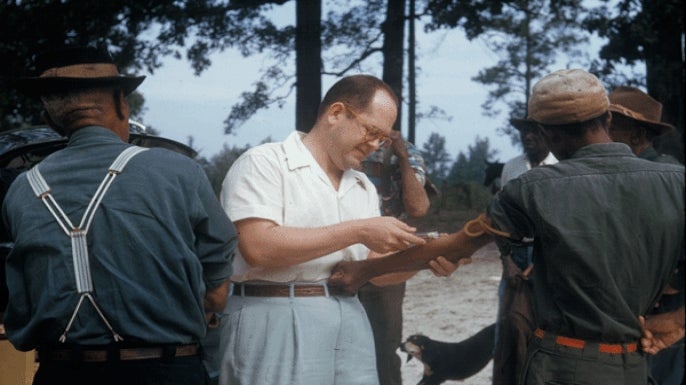
From the Tuskegee Syphilis Study to forced sterilizations, the darkest moments in our healthcare history stem from denying patients their autonomy.

This is why informed consent is not just a legal formality—it is a moral foundation.
It is why dignity must always come first—above efficiency, above policy, above cost-cutting measures.

Tuskegee Experiment Photo from National Archives


This Presidents’ Day, Let’s Ask the Right Question

Today, many will debate which presidents were the greatest.
Some will argue about who should be in power next.
Others will reflect on the state of democracy.

But in healthcare, the real question isn’t who should lead—we already know the answer.

The question is: Are we serving our monarchs well?

Are we truly listening to patients, or are we making decisions for them?
Are we honoring their sovereignty, or are we treating them as subjects in a system they can’t control?

Because if we fail to serve our monarchs properly, we risk rebellion—not in the streets, but in mistrust, disengagement, and avoidance of care.

And a kingdom without its rulers? That is a system doomed to fail.

This Presidents’ Day, as we celebrate the power of leadership, let’s not forget the one unshakable truth in healthcare:

Patients reign. And it is our duty to serve their majesty well.

A Pinch of Salt, A Lifetime of Impact: What Health Systems Can Learn

Early in my time in Happy Valley, as a doctoral student in Penn State’s Health Policy and Administration program (We are!), I became curious about how—and how well—our health care systems respond to us. Maybe it was the stark cultural shift I experienced moving from Miami, FL, to central Pennsylvania.

Growing up in Miami, I was used to a rich mix of cultures, traditions, and ways of living. Central PA, by contrast, felt like a single, inherited culture—one shaped by Pennsylvania-Dutch traditions, where people were kind but largely uninvolved in each other’s lives. (I was there during the Sandusky scandal, so, yeah, secrecy was part of the monoculture.) There was a quiet “to each his own” sentiment that felt completely new to me.

But my first real cultural shock didn’t come from social norms—it came from the food.

The Salt Shaker Moment

I’m far from a foodie, but I do appreciate good food. Yet everything I ate in Central PA tasted like… nothing. Just textured water. Boiled food, apparently, was considered “cooked.” If it had been during the COVID era, I might have thought I’d lost my sense of taste.

Then one day, I went out to eat with a friend from the area. As soon as our food arrived, I picked up my fork. She picked up the salt shaker.

I was stunned. I had never in my life used a salt shaker at a restaurant. In my upbringing, salt and pepper shakers were decorative—little markers to distinguish a dining table from a nightstand. If someone actually used them, it was either a joke or an insult to the cook. But for my friend, this was completely normal. She wasn’t fixing bad food—she was salting to taste.

This moment stuck with me. I would later realize, these small cultural habits extend beyond the dinner table—they shape our health in profound ways.

The Link Between Culture and Heart Health

We know sodium intake is linked to several health outcomes, especially heart disease. So what happens when an entire region adds salt at every meal over a lifetime?

Looking at geographical trends in cardiovascular mortality, parts of Pennsylvania rank among the highest in the nation for deaths due to heart disease. Meanwhile, Miami-Dade County—where I grew up, and where salt-shaming is a real thing—ranks among the lowest in the country for mortality from major cardiovascular diseases.

Does this mean Central PA’s salt-to-taste habit is a direct cause of higher heart disease rates? Not necessarily. Heart health is shaped by more than just nutrition—genetics, exercise, access to care, and social determinants all play a role. In fact, Miami-Dade does poorly in other areas, ranking among the worst in the nation for cardiomyopathy and myocarditis-related deaths.

But here’s the takeaway: local health trends are deeply tied to local cultures. And that means health systems must do more than push generic heart health campaigns—they need to respond to the specific needs of the communities they serve.

What Health Systems Can Learn

February is Heart Health Month, and many health systems are engaging in broad awareness campaigns—#WearRedDay, educational flyers, and social media outreach. But the real question is: Are these efforts tailored to the communities they serve?

  • If a community has high rates of hypertension, are health systems addressing sodium intake in culturally relevant ways?
  • If genetics and obesity play a larger role in a region’s heart disease rates, are screenings and lifestyle interventions prioritized?
  • Could a hospital-sponsored 5K or heart walk be more impactful than another awareness flyer?

All of these are good ideas for any hospital or health care system. But the better idea is to go with what will best serve your patients. The best approach isn’t just to educate—it’s to listen, analyze, and act on local data. Just like my salt-shaker moment taught me to recognize cultural habits that I’d never considered, health systems need to do the same with the populations they serve. Because at the end of the day, a pinch of salt might seem small—but over a lifetime, it can make all the difference.